

Have you ever wondered if the tech you choose might be the secret sauce that makes your project truly shine? A smart tech stack doesn’t just cut development time, it can also give your project that extra performance boost you’ve been looking for.
Imagine a logistics platform that took off 40% faster because it used the perfect blend of tools. Real-world success stories prove that mixing different technologies can really bring your vision to life and even boost your team’s confidence along the way.
In this piece, we’re diving into five bold tech stack examples that mesh each component into a smooth, efficient system. It’s all about fueling success and paving the way for smoother, faster project launches.
5 tech stack examples: Bold Options Fuel Success
If you're looking to make smart tech decisions, real-world examples can be your best friend. Seeing how different technology combinations work in practice not only clears up the confusion but also builds your confidence. Imagine learning that a logistics platform launched 40% faster simply because of the right stack choice, it’s a real eye-opener when you’re planning your own project.
These hands-on examples break things down in a way that’s easy to grasp. They show how every layer, from the user interface to the core data, teammates blend perfectly, paving the way for a smooth development process that’s both efficient and scalable.
- LAMP stack: Perfect for cost-conscious projects like e-commerce or CMS sites. It brings together Linux, Apache, MySQL, and PHP to keep your online presence strong.
- MEAN stack: A top pick for startups that need real-time features. Combining MongoDB, Express.js, AngularJS, and Node.js, it creates dynamic and engaging user experiences.
- MERN stack: Ideal for logistics SaaS projects that demand quick rollouts. Using MongoDB, Express.js, React, and Node.js, it can cut time-to-market by an impressive 40%.
- .NET stack: Built for high-stakes financial platforms, this stack uses C#, ASP.NET, and SQL Server to expertly manage transactions over $2 billion.
Numbers don’t lie. These stacks have been proven to boost developer productivity and simplify the often-tedious setup process. With a massive pool of talent, imagine over 500,000 available JavaScript developers in some cases, and clear efficiency gains, teams can reduce development time while still supporting the complex demands of modern applications.
Layered Architecture Examples in Tech Stack Examples
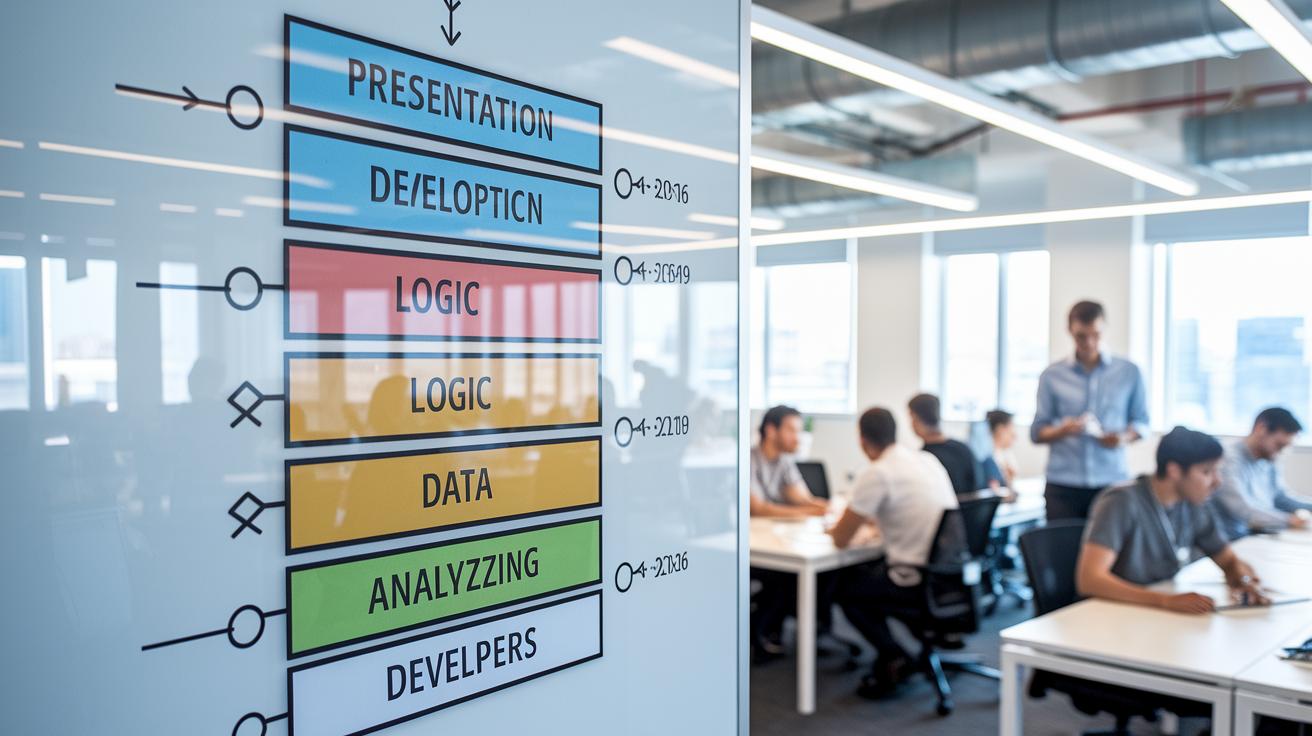
When building a tech stack, we combine different layers that each handle a specific part of your system, from the way users interact with your app to how data is stored. It’s like breaking a complex puzzle into smaller, manageable pieces, making it easier to spot issues or add cool new features. Ever notice how the front end is the friendly face of your application, while the behind-the-scenes layers do all the heavy lifting?
| Layer | Purpose | Example Technologies |
|---|---|---|
| Presentation | User interface and interaction | HTML, CSS, JavaScript |
| Application | Business logic and processing | Node.js, Django, Spring |
| Data | Data management and storage | MySQL, MongoDB, PostgreSQL |
Each layer stands on its own, so tweaking one rarely messes up the others. This smart separation keeps your whole system both sturdy and easy to update. You start with the basics, like HTML or CSS for the look and feel, and then move on to the more complex interactions handled by the application and data layers. In short, this modular method lets you roll out updates with minimal hassle, letting each part evolve without compromising your system’s overall stability.
AI and Data Science Tech Stack Examples
Python is incredibly versatile, which is why frameworks like Django and Flask are top picks for powering AI workflows. Developers appreciate these setups because they allow you to build applications that effortlessly handle complex data processing and machine learning tasks. Plus, when you throw in specialized libraries like TensorFlow (a tool that makes deep learning more accessible) and PyTorch (another favorite for training models), you’re all set to quickly roll out smart AI solutions.
Imagine setting up a predictive analytics tool where Django smoothly manages user interactions while TensorFlow takes care of intelligent decision-making behind the scenes. It’s like having a smart assistant that simplifies both development and testing.
Recent trends show a clear shift toward Python-based stacks, and forecasts for 2025 suggest even bigger AI integrations in enterprise projects. As companies weave machine learning into everyday operations, these specialized libraries are fitting ever more tightly into Django and Flask environments. This blend not only enhances advanced data visualization but also supports real-time model updates, reaffirming Python as the go-to choice for robust, scalable, and data-driven workflows.
Enterprise Tech Stack Examples for Large-Scale Systems

When you're overseeing a massive organization, you need tech that handles huge data, plays well with other systems, and ticks all the security boxes. Finding that perfect stack isn’t just about raw power, it’s about smooth, secure integration tailored to your unique needs.
ASP.NET Enterprise Stack
Built on C#, ASP.NET, and SQL Server, this stack is your go-to when strict security and compliance rules are the deal. It’s designed for scenarios where every detail matters, like automated regulatory reporting or managing sensitive patient records. One financial firm, for instance, completely revamped its compliance system with ASP.NET, which shaved off 40% of their audit cycles. Pretty cool, right?
Cloud-Native Enterprise Stack
For those who crave flexibility and speed, the Cloud-Native Stack is a real game-changer. It leverages microservices on Kubernetes and RESTful APIs (think of these as the toolsets that let different parts of your tech chat with each other) to give you agile, scalable performance. A dynamic retailer even used this approach to smoothly blend ERP systems during peak times, boosting their inventory coordination dramatically. And believe it or not, some startups doubled their order processing capability overnight using these modular cloud components. Check out more ERP integrations via solutions like Open Source ERP Software.
| Stack Name | Use Case | Key Components | Scalability |
|---|---|---|---|
| ASP.NET Enterprise Stack | Compliance-driven applications | C#, ASP.NET, SQL Server | High |
| Cloud-Native Enterprise Stack | Hybrid-cloud integration, ERP support | Kubernetes, RESTful APIs, Microservices | Flexible |
Comparing Popular Tech Stack Configurations
When you're choosing a tech stack, it's all about finding the right match between must-have features and those extra insights that make your project tick. Take a look at the table below, it layers unique perspectives right alongside the standard numbers.
| Stack | Best For | Strengths | Deployment Time | Developer Availability | Unique Insights |
|---|---|---|---|---|---|
| LAMP | Budget e-commerce | Cost-effective with easy hosting | 2–3 weeks | Widely available talent | Trusted by small businesses for quick prototyping |
| ASP.NET | Enterprise finance | Strong security and proven reliability | 4–6 weeks | Moderate talent pool | Favored by corporate tech teams for comprehensive security |
| MEAN/MERN | Real-time & startup platforms | Rapid roll-out with 40% faster time-to-market | 2–3 weeks | Large global talent pool (500K+) | Commended for cutting-edge performance with strong community backing |
If you're aiming for a simple, budget-friendly launch, the LAMP stack is a smart choice thanks to its ease and quick setup. But if your project demands extra security, especially in an enterprise setting, ASP.NET stands out even if it takes a bit longer to deploy. And for those real-time applications or startups driven by speed and modern tech, MEAN/MERN might just be the perfect fit with its dynamic, well-supported framework.
Diagrammatic Breakdown of Modern Tech Stack Examples
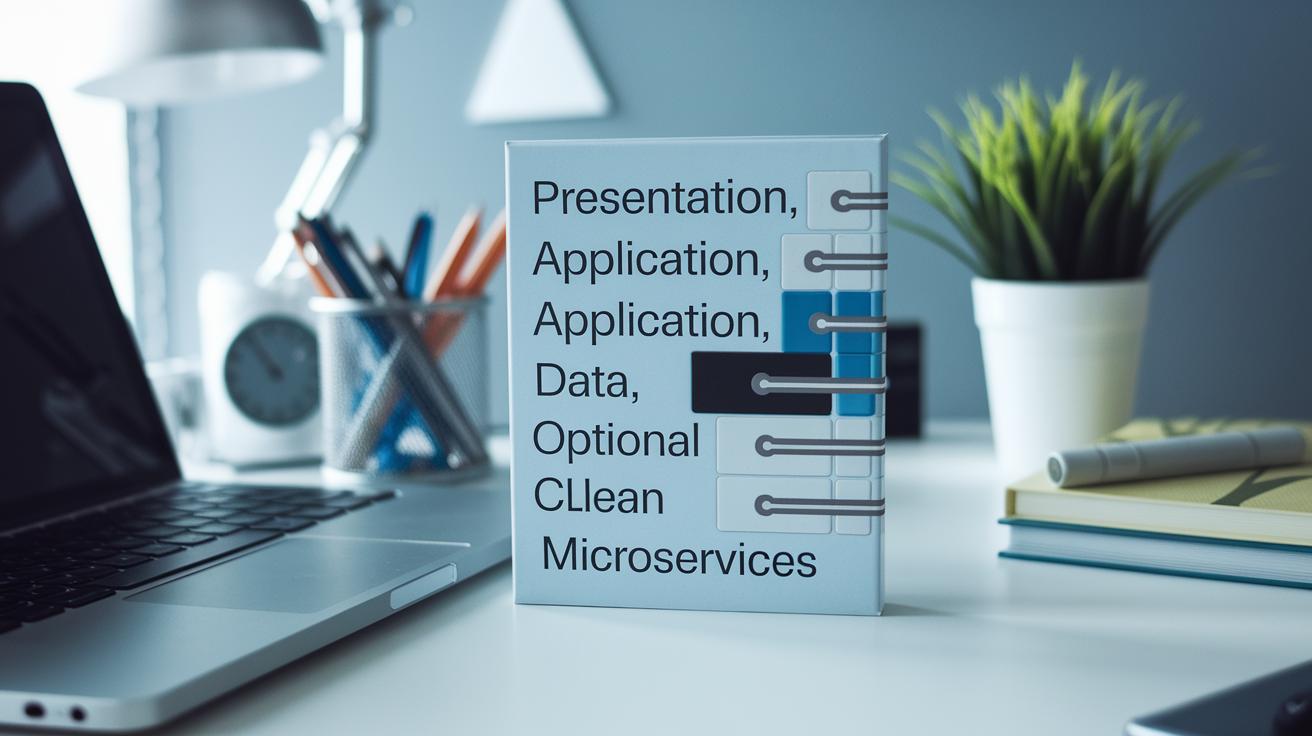
Diagrams are like a window into how your presentation, application, and data layers connect, now made even more engaging with clickable, interactive elements. Imagine clicking on a node, say, one representing the front-end interface or a data pipeline, and instantly seeing details like load times or design features. This blend of hands-on visuals with clear textual info not only speeds up onboarding but also makes troubleshooting a breeze, providing real-time insights every step of the way.
Note: Insert a labeled architecture diagram that clearly shows the Presentation, Application, Data, and optional Microservices layers with straightforward callouts.
Final Words
In the action, we explored real-world tech stack examples that cover a broad spectrum from budget-friendly setups to complex enterprise systems. We broke down layered architectures and compared popular configurations, including those using JavaScript frameworks as well as AI-driven Python stacks. Each section offered practical insights, clear use-cases, and visual guides that make decision-making simpler. The detailed explanations and examples aim to spark your curiosity and boost your tech confidence as you advance with your next project. Enjoy the continuous evolution of technology!
FAQ
What is considered a tech stack?
A tech stack refers to the combination of technologies used to build an application. It includes the front-end, back-end, and database layers, each contributing to a seamless user experience.
What are some popular tech stack examples for companies?
Popular tech stacks include options like LAMP for budget-conscious sites, MEAN or MERN for rapid deployment and real-time applications, and ASP.NET for enterprise solutions that require robust security and performance.
How do tech stacks support web and app development?
Tech stacks contribute to web and app development by combining tools for creating the user interface, processing data, and managing databases. This layered approach streamlines development and ensures efficient, scalable applications.
Is Python considered part of a tech stack for web development?
Python often serves as a key element within tech stacks, especially for web development. Frameworks like Django and Flask leverage Python’s simplicity and expansive libraries to support dynamic, scalable web applications.
What’s the most popular tech stack?
Many developers favor JavaScript-based stacks like MEAN or MERN due to their speed, flexibility, and broad community support, which accelerates deployment times and meets modern application demands.