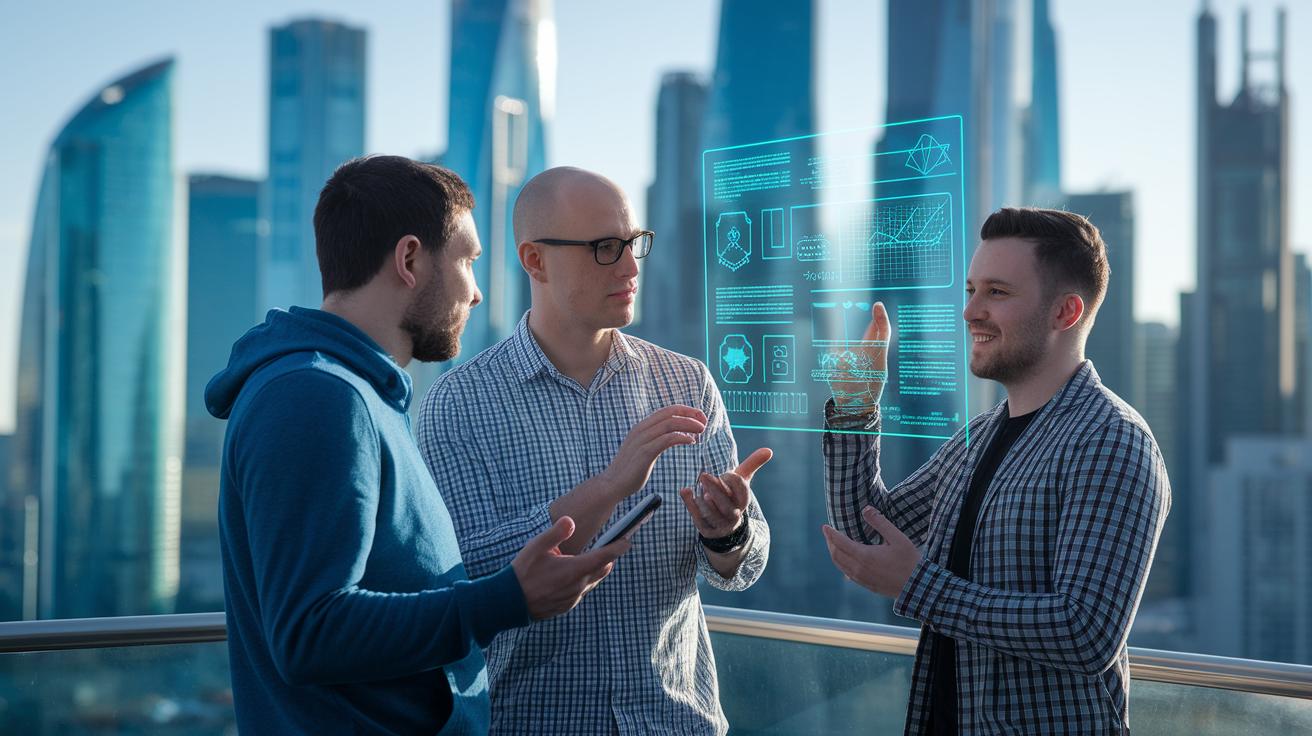

Have you ever wondered how today’s tech breakthroughs could transform your everyday life? Imagine an AI system that not only chats with customers but also learns and predicts trends to help your business run smoother, kind of like having an insightful assistant by your side.
And think about quantum computing: what once seemed like impossible puzzles are now within reach, almost as if we're unlocking a secret level in technology. Meanwhile, cybersecurity tools are stepping up their game to protect us against threats that seem to grow by the day.
These innovative shifts aren’t just buzzwords; they’re setting the stage for a future where everything around us, from the smart gadgets in our homes to sustainable tech solutions, is more connected and capable than ever. Dive in with us as we explore how these tech advances are paving the way for a dynamic, tech-driven world.
Overview of Emerging Tech Trends to Watch in 2026
Artificial Intelligence has grown from experimental trials into a crucial part of everyday business. Chatbots now handle millions of customer inquiries, and predictive analytics help smooth out supply chains. Take this for example: generative AI usage jumped from 55% in 2023 to 75% in 2024, delivering an impressive average return on investment of 3.7 times. Really, it's fascinating how technology pays off.
Quantum computing isn’t just a lab experiment anymore, it’s stepping into real-world applications. Using qubits (the basic units of quantum information), these systems solve problems at lightning speeds compared to traditional computers. Industries like finance and pharmaceuticals are already using ideas like superposition and interference to simulate complex scenarios and sharpen their strategies. It’s like having a turbo boost for decision-making.
Cybersecurity has become a top boardroom priority as digital threats rise. With cybercrime costs predicted to hit about $10.5 trillion annually by 2025, businesses are quickly adopting AI-driven threat detection, identity-based access controls, and rock-solid cloud platforms. These advances are completely reshaping how companies safeguard sensitive data and build digital trust.
The evolution of IoT ecosystems has turned them into the backbone of modern digital infrastructure. From sensors to smart vehicles, connected devices exchange real-time data that provides invaluable insights into operations. Combined with robotics handling routine tasks, this tech synergy boosts overall efficiency in ways that feel almost seamless.
Green tech innovations are making waves by merging renewable energy, biodegradable materials, and smarter storage solutions. Such advancements help industries lower their environmental impact while staying ahead of regulatory requirements. This blend of technology and sustainability is setting the stage for both economic and operational transformation.
| Technology | Key Impact |
|---|---|
| Artificial Intelligence | Optimizes operations and enhances supply chain efficiency |
| Quantum Computing | Solves complex problems at unprecedented speeds |
| Cybersecurity | Fortifies data protection amidst mounting digital threats |
| IoT Ecosystems | Establishes a connected framework for real-time insights |
| Robotics Automation | Boosts production efficiency with smart, automated systems |
| Green Tech | Drives sustainable practices and reduces environmental impact |
Artificial Intelligence and Emerging Tech Trends in Machine Learning

Large Action Models (LAMs) are taking automation to a whole new level. They handle multi-step processes that used to require a human touch. Imagine this: processes like order fulfillment now run on their own, cutting task times from hours to mere minutes while keeping accuracy intact. It’s a game changer where complex tasks once reserved for expert coders are now streamlined through smart algorithms.
Agentic AI systems are also stepping into the spotlight by making smart, on-the-fly decisions. Think about a system that tweaks its own settings mid-process, reacting to real-time data without waiting for a human hand to guide it. This approach goes way beyond regular, predictable responses, boosting efficiency in fast-changing environments.
No-code automation tools are reshaping how we integrate digital systems. In the past, updating systems or onboarding new employees meant wrestling with complicated code. Today, these intuitive platforms let both tech teams and non-coders quickly set up robust, automated routines. For example, a no-code tool might allow a manager to connect different data streams seamlessly, no programming needed.
| Innovation | Capability | Impact |
|---|---|---|
| Large Action Models (LAMs) | Handle multi-step processes autonomously | Reduces time and lessens reliance on human intervention |
| Agentic AI Systems | Adjust settings in real time for smarter decisions | Optimizes performance in quickly changing environments |
| No-Code Automation Tools | Create powerful workflows without coding | Simplifies digital integration and speeds up onboarding |
Quantum Computing Advances Among Emerging Tech Trends
Keeping qubits stable and correcting errors is still a major hurdle in quantum computing. Lately, researchers have been making progress with smarter error-correcting codes and improved cooling methods that help keep quantum processors steady. Just imagine a system where error correction is so efficient that the quantum machine can run for days without a hitch, this is exactly the kind of breakthrough experimental teams are achieving.
A fresh trend is emerging with hybrid quantum-classical setups that combine the best of both worlds. These systems are designed to work alongside traditional computers to tackle specific tasks, like optimizing logistics in real time or running targeted simulations. It’s like getting both speed and smart analysis rolled into one.
Experts believe that quantum computing will soon drive next-generation applications in machine learning and big data processing. Innovators are saying that merging these systems with conventional models will pave the way for simulation tools that could really transform everything from supply chain management to cybersecurity.
Key breakthroughs include:
- Techniques that keep qubits coherent and stable.
- Hybrid models that blend quantum and classic computing.
- Promising effects on logistics and cybersecurity.
Next-Generation Cybersecurity as a Core Emerging Tech Trend

Imagine a time when cybercrime costs could soar to $10.5 trillion a year by 2025, that’s why top executives are making cybersecurity a boardroom priority. The latest tech solutions are racing ahead, using AI-powered threat detection (that’s computers spotting suspicious patterns), zero-trust methods, and robust cloud measures designed to stand up against relentless cyber attacks. Picture a system that sifts through massive streams of data in real time and immediately flags any odd behavior, it’s like having a digital watchdog on constant patrol.
Companies are now pairing live anomaly monitoring with identity-based access controls to ensure every digital door is securely locked. This approach builds a modern, risk-resilient infrastructure where every entry is verified before access is granted. Plus, with multi-layered, advanced cloud security, even if one safeguard fails, the whole system remains rock-solid against persistent threats.
By putting these strategies first, organizations can ditch advanced, ongoing cyber threats and keep their operations running smoothly while maintaining the trust of their stakeholders. Simply put, embracing next-generation cybersecurity isn’t a nice-to-have, it’s the foundation of a safe digital future in a world where cyber threats are growing every day.
IoT Integration and Edge Computing in Emerging Tech Trends
Imagine walking into a factory where sensors instantly check machine performance and even alert the team for maintenance before a problem escalates. That’s the magic of combining IoT with edge computing.
Today’s digital operations lean on connected vehicles, smart gadgets, and sensors that share real-time data without the hassle of waiting for far-off servers. Think of a smart traffic system that tweaks light signals on the fly to ease congestion. For example, one city’s sensor managed to cut congestion by 20% by processing data right at the spot, erasing a pesky 20-second delay in signal changes.
Edge computing shifts data processing closer to where it's needed, which not only cuts latency and slashes bandwidth costs but also speeds up decisions when it matters most. Whether it’s alerting a factory about a potential machine hiccup through predictive maintenance or keeping city traffic smooth with decentralized analytics, this approach makes technology feel both personal and reliable.
| Application | Benefit | Example |
|---|---|---|
| Manufacturing | Predictive maintenance | Sensors notify teams about potential faults early |
| Smart Cities | Real-time data processing | Traffic systems adjust signals instantly during peak times |
| Connected Vehicles | Enhanced responsiveness | Vehicles exchange alerts to help prevent accidents |
Robotics Automation Insights in Emerging Tech Trends

Robotics is transforming industries like manufacturing, logistics, and services in ways we couldn’t have imagined before. Today’s robots, bolstered by AI (think of it as smart software learning from data) and edge computing (processing done close to where data is collected), are the real workhorses of Industry 4.0. They’re taking over tasks that once needed lots of human hands, making operations much smoother.
Take warehouse picking, for instance, autonomous mobile robots handle it with speed and precision, slashing cycle times and ramping up throughput. On the assembly line, AI-powered robotic arms carefully fit even the tiniest parts with flawless accuracy. And then there are collaborative robots, or cobots, which team up with human workers to enhance productivity while keeping everyone safe.
Here's a fun fact: In one facility, introducing robotic automation sliced order processing time by nearly 40%. That’s a major shift in how fast things can move! Plus, as the cost of robotic hardware drops, more industries are embracing this technology, lowering operational costs and delivering top-notch service levels.
| Robotics Type | What It Does | How It Impacts the Industry |
|---|---|---|
| Autonomous Mobile Robots | Handle warehouse picking | Streamline logistics operations |
| AI-Powered Manipulators | Perform precision assembly | Improve manufacturing quality |
| Collaborative Robots (Cobots) | Work alongside human teams | Boost workplace safety and efficiency |
Sustainable Innovation as an Emerging Tech Trend
Green tech is shaking things up for our planet and even changing how businesses operate. Companies are turning to renewable energy, think solar and wind, which naturally replenish themselves, and smart battery systems that modernize operations while keeping up with strict regulations. These eco-conscious materials reduce carbon emissions and support manufacturing methods that reuse resources and minimize waste.
Imagine a smart grid that adjusts power on the fly. Picture a network where energy supply automatically shifts to match your consumption, cutting energy loss and boosting efficiency. This clever system balances demand in real time for a sturdier, more resilient infrastructure. Similarly, new biodegradable sensors are proving their worth in monitoring our environment. For example, a plant might use these sensors to keep tabs on air quality, transforming raw data into insights that can curb environmental risks.
Other smart innovations mix renewable energy with high-tech storage solutions, ensuring consistent power even during peak demands. In short, sustainability isn’t just about ticking regulatory boxes, it’s opening up fresh business opportunities and transforming industries. Through embracing these advances, we’re on track to shape a greener future with tech that truly makes a difference.
Emerging tech trends Ignite Bold Futures

Tech experts are saying that by 2026, building a strong digital culture, nurturing talent every step of the way, and having solid risk-management plans will be game changers for emerging technology. Companies that jumped on the advanced automation and AI bandwagon early on saw productivity jump by 20% to 30%. It's pretty clear: diving into new tech sooner rather than later truly pays off.
Starting small is key. Launch a single pilot project to test new solutions safely. This lets your team experience the tech firsthand, hone their skills, and boost confidence before a full rollout. With each step, you'll learn and adapt, keeping any hiccups to a minimum.
Here are a few friendly tips to guide you:
| Tip | Why It Works |
|---|---|
| Build cross-functional teams | Mix tech skills with on-the-ground experience to tackle challenges together |
| Focus on regular upskilling | Keep your team sharp so they can make the most of advanced tools |
| Create proactive risk-management plans | Prepare for both current and future challenges as digital transformation deepens |
Take, for instance, a mid-sized logistics firm that started with an AI-driven pilot project focusing on routine tasks. That small success paved the way for a broader rollout across departments, dramatically improving efficiency.
By following these insights, organizations can turn emerging tech trends into powerful competitive advantages that drive lasting, sustainable growth.
Final Words
In the action, this article explored a range of cutting-edge innovations, from AI and quantum computing to next-generation cybersecurity, IoT integration, robotics innovations, and sustainable tech improvements. Each section showcased real-world applications and strategies that help bridge today's tech with tomorrow's promise.
Emerging tech trends continue to reshape business models and everyday life. Stay curious and keep embracing the breakthrough tools that make our world smarter.
FAQ
Frequently Asked Questions
What are the top emerging tech trends to watch?
The top emerging tech trends include Artificial Intelligence, quantum computing, next-generation cybersecurity, IoT ecosystems, robotics automation, and sustainable innovations, each set to reshape industries and drive economic impact.
What technology trends are predicted for 2025 and 2026?
The predicted technology trends for 2025 and 2026 focus on increased AI adoption with measurable ROI, advanced security systems to combat rising cybercrime, and emerging digital ecosystems integrating IoT and edge computing.
How do emerging tech trends impact business and IT infrastructure?
Emerging tech trends drive business transformation by enabling real-time data analytics, predictive maintenance, and efficient automation, while IT infrastructure adapts through decentralized processing and robust cloud security measures.
What are some examples of emerging technologies in various industries?
Examples of emerging technologies include generative AI for streamlining customer interactions, quantum computing for complex problem solving, and robotics and IoT integration that improve manufacturing and smart-city management.
How do these emerging tech trends influence the software industry?
The emerging tech trends in the software industry propel innovations such as advanced machine learning algorithms, no-code automation tools, and AI-driven predictive analytics that optimize supply chains and enhance application performance.
What insights do Gartner and McKinsey offer regarding tech trends?
Insights from Gartner and McKinsey highlight the need for pilot programs, phased rollouts, and upskilling to successfully adopt emerging technologies, emphasizing measurable productivity gains and strategic business transformation.