

Ever thought about how future tech might totally transform your day-to-day? Imagine having smart systems that team up with you, blending advanced AI (that’s computer brainpower designed to mimic human thinking) with a dash of human intuition. As new technologies join forces with our own skills, we’re looking at changes that go way beyond simple updates. It’s not just about how we work, it’s about reshaping our personal interactions too, turning tech into a trusted partner in our everyday lives. So, let’s get excited and embrace this bold new tech era that’s making our world feel smarter and more connected than ever.
Future Tech Predictions: Comprehensive Overview of Emerging Innovations
By 2026 and beyond, technology is set to become more people-focused, blending smart automation with the personal touch we all appreciate. This isn’t about replacing us, it’s about teaming up with AI to boost our expertise and even our gut instincts. In fact, a recent study found that over 80% of professionals say AI helps them make quicker, better decisions while still trusting their own judgment.
We’ve also moved from a time when digital information was hard to come by to an era where resources are instantly available. Think about how Wikipedia evolved from a small knowledge store to a vibrant, open-access hub. This digital boom is changing every industry, from healthcare and education to manufacturing and finance, by combining face-to-face interactions with the efficiency of automation.
Key trends to watch include:
- AI and human collaboration that's reshaping work in hospitals and classrooms.
- Automation and virtualization that keep manufacturing running smoothly in real time.
- A new era of digitization that tears down old information barriers.
- Technological breakthroughs fueling creative problem-solving in businesses of all sizes.
The future of tech isn’t just about small updates, it’s about bold, transformative changes that will make our everyday experiences smarter and more personalized. These innovations are poised to rewrite the way we live, work, and connect with each other.
Methodologies and Pitfalls in Future Tech Predictions

Predicting the next big tech breakthrough is never as straightforward as it might seem. Often, traditional forecasts bank on the idea that technology marches forward in a neat, linear fashion. But anyone who’s followed tech evolution knows that progress rarely follows a straight path. Instead, it twists and turns in unexpected ways, making rigid predictions all too common a miss.
Take, for example, the situation where nearly 80% of radiologists pushed back against the idea of fully replacing their expertise with AI. Or consider the unpredictable journey of factory electrification. These instances show us that when a forecasting model assumes steady progress, it easily trips over the reality of rapid, complex changes.
One effective way to handle these erratic trends is the 5A model. This approach starts by clearly setting the scope and timeline, and then spots the key factors that could sway the outcome. It’s like planning for all the “what ifs,” ensuring you’re not caught off guard by sudden shifts in the tech world.
Common stumbling blocks in tech predictions include:
| Issue | What It Means |
|---|---|
| The myth of linear progress | Believing that innovation unfolds in a straight line, when in reality it’s full of surprises. |
| Historical inaccuracies | Mistakes in reading past trends lead to skewed expectations today. |
| Inflexible forecasting models | Rigid plans simply can’t keep pace with the quick, unpredictable shifts in tech. |
By embracing more flexible models that consider these pitfalls, we can build a forecasting framework that’s not only insightful but also in tune with the pulsating, ever-evolving tech landscape. After all, aligning our current insights with rapid advances isn’t just smart, it’s essential for staying ahead in the tech game.
Future Tech Predictions in AI and Machine Learning
Generative AI is changing the game for coding in ways many never imagined. Developers aren’t disappearing; instead, they’re evolving into creative problem solvers who mix art with logic. Picture a programmer starting the day with an interesting tidbit: back in 2023, generative AI started building entire code modules on its own. It’s less about replacing human talent and more about empowering developers to tackle more intricate challenges with a fresh perspective.
Healthcare is taking a bold leap forward too. Industry leader Philips is working on seamlessly weaving AI into everyday doctor–patient interactions. Think of AI quietly supporting doctors in the background, making it easier for them to make well-informed decisions without getting in the way. This subtle integration is just one example of how AI tools, like those in the latest assistive technologies, are set to transform workspaces in many fields.
Over in the world of predictive analytics, things are heating up. The explosion of big data and cloud trends are propelling these technologies to new heights across finance, supply chain management, and retail markets. Companies are gearing up to use these insights to spot trends, make quick decisions, and plan strategies that adapt in real time.
In short, this isn’t about routine automation, it’s about ushering in an era of ingenuity. Machine learning is set to remold entire industries, making technology a natural extension of human creativity rather than a competitor. Isn't it exciting to see tech evolve in such a human-friendly way?
Future Tech Predictions for Connectivity: IoT, 5G, and Edge Computing

The rise in IoT usage is reshaping the way we work, easing us away from rigid office setups and into nimble, function-based environments. Gadgets once limited to our homes are now starring in industrial plays, tracking real-time metrics and keeping operations running smoothly. Imagine standing on a factory floor where smart sensors are constantly at work. I still remember the first time I saw one in action, their instant feedback was simply unforgettable.
Meanwhile, 5G is taking innovation to a whole new level by slashing latency to under 10 ms. This breakthrough opens up exciting possibilities, from real-time industrial automation to deeply immersive AR and VR experiences. Believe it or not, some manufacturing plants using 5G can adjust their operations in mere milliseconds, showcasing how crucial precise, real-time data control truly is.
And then there’s edge computing, stepping in to process data right where it’s created. By handling analytics locally, it cuts down on bandwidth use and speeds up response times considerably. Think about it this way: instead of sending every data point off to a far-off server, local edge devices sort through the info, much like scrolling through your social feed on your phone instead of waiting for an entire webpage to load.
| Technology | Key Benefit |
|---|---|
| IoT | Enhanced situational awareness across flexible work models |
| 5G | Real-time responsiveness for automation and AR/VR applications |
| Edge Computing | Reduced latency by processing data locally |
Future Tech Predictions for Quantum Leap Prospects and Cyber Defense Insights
Breakthroughs in quantum computing are reshaping the way we secure our digital world. As error-correction improves and qubits hit new milestones, traditional encryption just isn’t enough anymore. That’s why experts are ramping up quantum engineer training programs, mixing academic insights with industry know-how to prep our systems for the quantum age.
Companies now get that these quantum advancements bring fresh challenges. Critical systems and personal data could soon be at risk from cyber adversaries exploiting quantum power. Cyber defense trends tell us that quantum-safe security isn’t just smart planning, it’s a must-have strategy. For example, evolving blockchain innovations are now safeguarding supply chains and digital identities in environments built for a post-quantum era.
Imagine a breach that isn’t about basic stolen credentials but a lightning-fast, quantum-enabled attack. In reaction, firms are overhauling encryption methods by adding advanced error correction and strong quantum-resistant algorithms. It’s like moving from a fixed shield to a dynamic game of chess against incredibly quick threats.
Investing in quantum-safe research and revamping core security measures lays the foundation for a tougher digital future, one where rapid progress stands toe-to-toe with looming new risks.
Future Tech Predictions for Green Energy and Sustainable Innovation
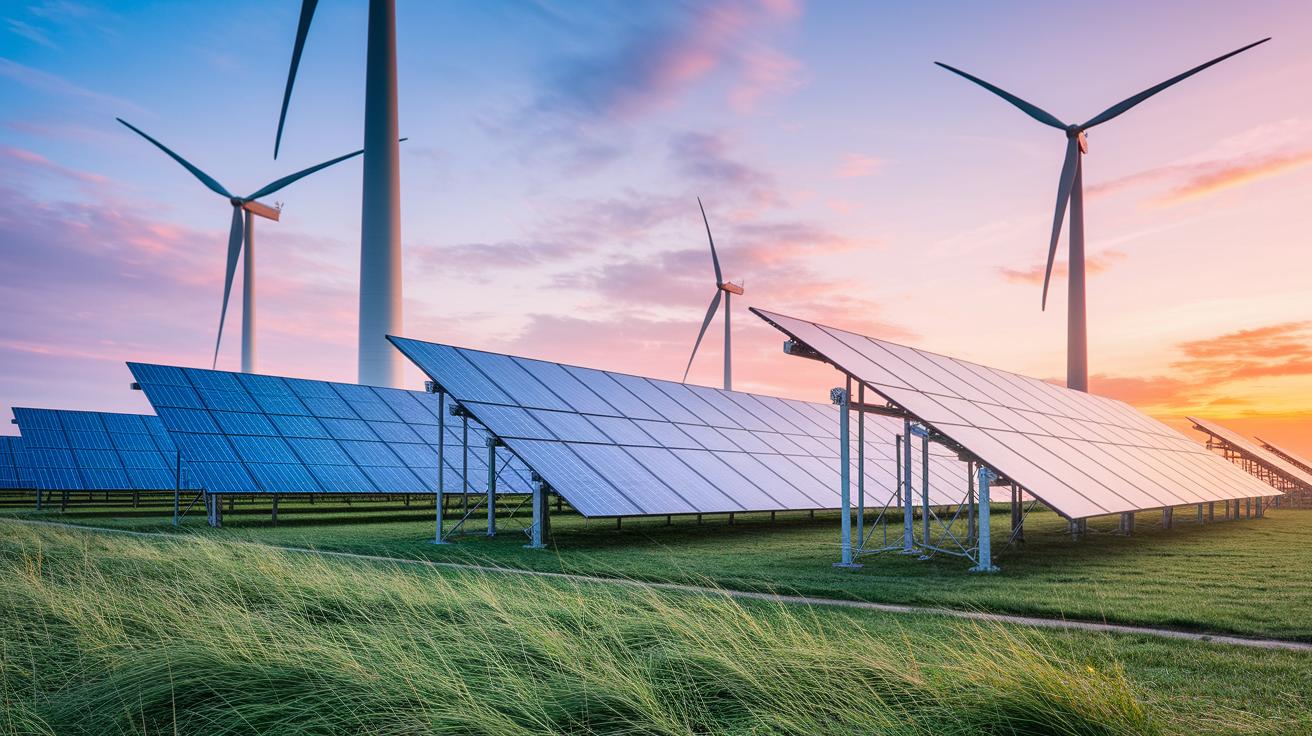
Green energy is quietly undergoing a radical change. In places like the Netherlands and the U.S., renewable projects haven’t yet captured the political spotlight as many thought they would. But breakthroughs in battery chemistry and large-scale storage are now opening doors for more affordable solar and wind power. Imagine solar panels that don’t just gather sunlight but also store energy as smartly as a top-notch battery, cutting utility bills in the process. This isn’t just hot air; it’s a glimpse into a future where new storage tech slashes costs and ramps up renewable energy use, even if political leaders are a bit slow on the uptake.
There’s a surge in clean technology on the horizon, with innovations like carbon capture and smart grids set to completely transform our energy networks by the 2030s. Alongside that, evolving energy storage will minimize waste and boost system efficiency. It’s a bit like polishing a rough draft until every line sings; every tech improvement adds a meaningful chapter to the story of sustainable progress. As these eco-friendly disruptors mature, they’ll help us find the perfect balance between consumption and conservation, leading us into a future where sustainable innovation fuels real, bold progress across every sector.
Future Tech Predictions for 2050: Advanced Gadgets and Virtual Realm Developments
Imagine waking up one day and having a neural implant that gives you instant access to the world’s data, a bit like having your personal assistant wired right into your brain. With neural implants and genetic modifications on the horizon, our minds and bodies are set for a major upgrade. These cool innovations promise to change the way we communicate, play, and learn, turning ideas into projects almost as fast as you think them. It’s like watching science fiction come to life, where biology and machinery blend into one seamless experience.
Then there’s the role of companion robots and AR/VR platforms in tackling modern loneliness. With many feeling isolated, especially older adults, future tech isn’t just about convenience; it’s about enhancing our emotional well-being too. Picture a robot that not only entertains but also provides genuine support when you need it. Meanwhile, immersive augmented reality could soon let you share lifelike interactions, making long-distance connections feel surprisingly real. It’s all about designing a future where technology and empathy go hand in hand.
| Innovation | Impact |
|---|---|
| Neural Implants | Instant data access and cognitive enhancement |
| Companion Robots | Tackling chronic loneliness with interactive support |
| Mixed Reality Prototyping | Accelerating design through virtual models |
Final Words
In the action of exploring future tech predictions, this post painted a clear picture of what's on the horizon. We looked at everything from AI and machine learning breakthroughs to seamless connectivity through IoT, 5G, and edge computing. We also touched on quantum-safe strategies, green energy innovations, and advanced gadget concepts set for a 2050 reality.
The forecast excites us and calls for a smart, confident approach to tomorrow's tech shifts. It's an inspiring look at how emerging ideas will shape everyday tech use.
FAQ
Future tech predictions 2030
Future tech predictions 2030 suggest major innovations like AI-human collaboration, advanced connectivity through 5G and edge computing, sustainable energy breakthroughs, and quantum computing developments reshaping industries and daily life.
Future tech predictions Reddit
Future tech predictions on Reddit center around disruptive trends, including automation and rapid digital integration, with users highlighting the transformative impact of AI and emerging green technologies in our evolving tech landscape.
Future tech predictions 2025
Future tech predictions 2025 emphasize the early adoption of enhanced AI capabilities, robust IoT networking, and greener energy practices, coupled with advanced cybersecurity measures to support a more interconnected digital ecosystem.
What are the future technology predictions?
Future technology predictions span the evolution of AI, smarter IoT and 5G connectivity, quantum computing breakthroughs, and sustainable innovations, collectively driving transformative changes in various sectors.
What is future technology in the next 5 years?
Future technology in the next 5 years is set to introduce more intuitive AI systems, seamless IoT integration, and incremental robotics improvements, resulting in enhanced efficiency and smarter everyday applications.
What will be the next tech boom?
The next tech boom is expected to leverage significant AI advancements and next-generation connectivity, spurring innovative digital experiences and revitalizing traditional industries through advanced automation and smarter solutions.
What technology is expected in 2050?
Technology expected in 2050 will likely feature neural implants, advanced augmented and virtual reality, companion robots, and genetic enhancements, collectively expanding human capacity and creating immersive digital living environments.
How do McKinsey Technology Trends outlooks shape future predictions?
McKinsey Technology Trends outlooks shape future predictions by offering data-driven insights into emerging innovations across automation, AI, and connectivity, guiding industry strategies and investment priorities in an increasingly digital world.